/// WHATSAPI
WhatsAPI
Private self-hosted WhatsApp gateway for messaging, calls, and real-time automation.
Private project. Source is not public. This is the outline I can share.
The Problem
The CRM needed WhatsApp messaging and calling without paying a third-party SaaS for every seat, every message, and every feature that should have been a webhook. The automation also needed to live close to the CRM, not in a vendor’s dashboard with its own ideas about data ownership.
What I Built
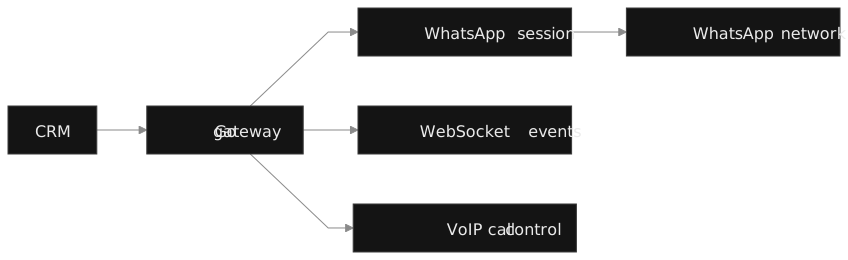
A Go service that behaves like a proper gateway:
- WhatsApp messaging, including the boring parts: sessions, reconnects, delivery state, and errors that do not lie about success.
- VoIP call handling and real-time events over WebSocket.
- A small HTTP surface that the CRM can call without knowing anything about the WhatsApp protocol.
- Docker deployment with a footprint small enough to run next to the rest of the stack.
- Persistent session handling, because re-pairing a device every morning is not a feature.
The Result
The CRM can send follow-ups, deliver documents, capture inbound leads, and handle calls without depending on a third-party automation platform. The gateway is one service with one job, which makes it much easier to debug when WhatsApp changes something on a Tuesday.
Stack
Go, whatsmeow, Docker, WebSocket.
Architecture
Notes
This is private work, so there is no public repository. The interesting engineering is in the session lifecycle and the event model, both of which are described in the phone calls post.